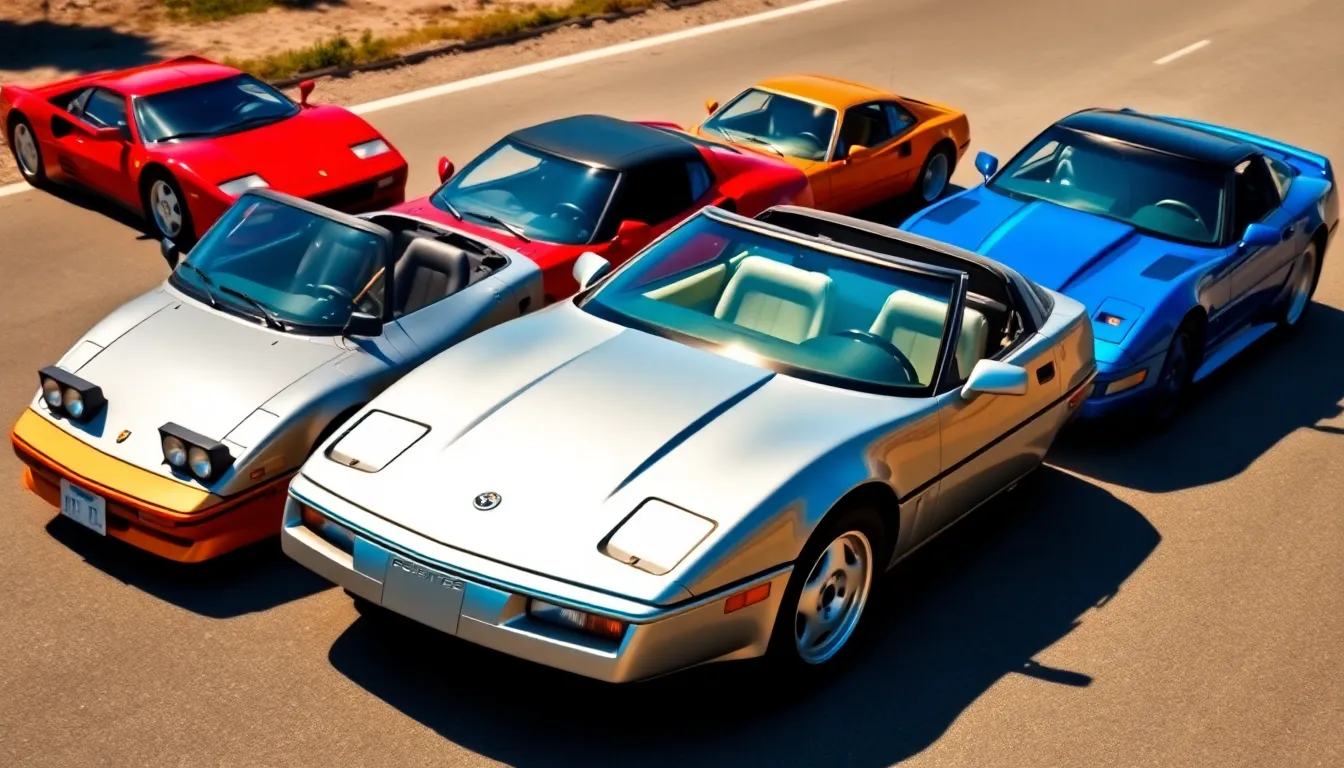
The 1980s was a golden era for sports cars, a time when speed met style and technology took a thrilling leap forward. Picture this: mullets, neon colors, and the roar of engines that could make a heart race faster than the cars themselves. From the iconic Ferrari Testarossa to the sleek Porsche 911, these machines didn’t just turn heads; they left a trail of rubber and envy in their wake.
1980s Sports Cars
The 1980s revolutionized the sports car industry with a unique blend of performance and aesthetics. Characterized by bold designs and innovative features, this decade produced vehicles that remain iconic today. Lightweight materials like fiberglass and aluminum began appearing in many models, improving speed and handling.
Technological advancements played a crucial role during this period. The introduction of turbocharging elevated engine performance significantly. Manufacturers like Porsche and Ferrari redefined speed benchmarks, captivating enthusiasts worldwide.
Several models emerged as standout performers. The Ferrari Testarossa, with its distinct side strakes, showcased unmatched power and luxury. The Porsche 911, often regarded as the quintessential sports car, combined practical performance with everyday drivability.
American manufacturers also made noteworthy contributions. The Chevrolet Corvette offered aggressive styling and robust horsepower, appealing to those craving raw performance on open roads. Ford’s Mustang, equipped with the turbocharged engine option, gained popularity among speed enthusiasts.
Cultural influences further shaped the perception of 1980s sports cars. Movies often featured these powerful machines, embedding them into popular culture. Car shows and exhibitions highlighted their appeal, attracting attention from both young drivers and collectors alike.
In terms of performance specs, many models achieved remarkable acceleration times, often under six seconds from zero to sixty mph. Engine options typically ranged from V6 to V8 configurations, ensuring a diverse market for horsepower enthusiasts.
The legacy of these sports cars extended beyond their production years. Many collectors treasure them, recognizing their impact on the automotive industry. As nostalgia continues to grow, the influence of 1980s sports cars resonates within modern automotive design and innovation.
Iconic Models From The Era
The 1980s produced several iconic sports cars that defined the automotive landscape. Notable models from this decade continue to captivate enthusiasts.
Ferrari 288 GTO
Ferrari introduced the 288 GTO in 1984, making it a standout in the supercar segment. This model featured a 2.9-liter twin-turbocharged V8 engine, generating 400 horsepower and achieving a top speed of 189 mph. Lightweight materials and aerodynamic design enhanced its performance and handling. Only 272 units were produced, making it highly sought after among collectors. Its captivating styling and impressive specs solidified the 288 GTO’s legendary status in automotive history.
Porsche 911 Turbo
The 1980s saw the rise of the Porsche 911 Turbo, known for its distinctive whale tail spoiler and robust performance. Introduced in 1975, this model gained significant popularity during the decade, featuring a turbocharged 3.3-liter flat-six engine. It produced 282 horsepower, allowing it to accelerate from 0 to 60 mph in just 4.6 seconds. Porsche’s engineering excellence contributed to its fine handling and stability. This model remains a timeless classic, with enthusiasts appreciating its blend of everyday usability and thrilling performance.
Chevrolet Corvette C4
Introduced in 1984, the Chevrolet Corvette C4 marked a new era for American sports cars. This model featured a sleek design and a 5.7-liter V8 engine producing 230 horsepower. With a top speed of 156 mph, it captured attention on and off the track. Innovative technologies like digital instrumentation and a removable roof made the C4 appealing to many drivers. Production continued until 1996, with significant sales numbers, solidifying its place in sports car history.
Design Innovations In 1980s Sports Cars
The 1980s marked a significant turning point in the design of sports cars, emphasizing performance and aesthetics through innovative features.
Aerodynamics
Aerodynamic enhancements became a key focus in the 1980s sports car design. Manufacturers aimed to create sleek silhouettes that reduced drag and increased stability at high speeds. Features like retractable headlights and flush door handles contributed to a smoother exterior. The Ferrari 288 GTO exemplified this with its rounded edges and aggressive stance, improving airflow across the body. The Porsche 911 Turbo also featured a prominent rear wing, known as the whale tail, that not only enhanced downforce but also became a defining characteristic of the model. Prioritizing aerodynamics allowed these cars to achieve impressive speeds while enhancing visual appeal.
Lightweight Materials
Many 1980s sports cars utilized lightweight materials to improve performance. Manufacturers adopted fiberglass and aluminum to reduce overall weight, significantly enhancing speed and handling. The Chevrolet Corvette C4, for instance, featured a fiberglass body, which contributed to its sporty performance. In addition, the use of lower-weight components meant better acceleration times and improved fuel efficiency. Turbocharging also played a role, allowing smaller engines to produce substantial power without increasing the weight. This marriage of lightweight design and technology produced vehicles that were both dynamic on the road and visually striking, ensuring their legacy in automotive history endures.
Performance Characteristics
The 1980s showcased remarkable performance advancements in sports cars, centered on engine technology and handling capabilities. Enthusiasts embraced dynamic driving experiences and innovative engineering.
Engine Technology
Turbocharging emerged as a defining feature. This technology elevated horsepower across many models, enhancing acceleration and speed. The Ferrari 288 GTO, equipped with a 2.9-liter twin-turbocharged V8 engine, produced 400 horsepower while achieving a top speed of 189 mph. Equally impressive, the Porsche 911 Turbo utilized a turbocharged 3.3-liter flat-six engine to deliver a thrilling driving experience. American manufacturers also joined in, with the Chevrolet Corvette C4 featuring a powerful V8 engine that contributed to its performance legacy. Collectively, these advancements transformed engine dynamics and set new benchmarks for automotive excellence.
Handling and Suspension
Handling characteristics took center stage in sports car design. Manufacturers focused on suspension systems that ensured stability at high speeds. Both the Ferrari 288 GTO and Porsche 911 Turbo featured enhanced suspension setups, offering responsive steering and improved cornering abilities. American counterparts like the Chevrolet Corvette C4 employed advanced chassis designs that balanced comfort with performance. Lightweight materials played a crucial role in minimizing body roll and maximizing agility on the road. These innovations allowed for a breathtaking driving experience that captivated enthusiasts during the decade.
Cultural Impact Of 1980s Sports Cars
The 1980s sports cars significantly impacted culture, influencing music, film, and automotive enthusiast communities.
Influence On Music and Film
Movies like “Knight Rider” and “Miami Vice” prominently featured 1980s sports cars, making them symbols of speed and freedom. Iconic scenes showcased fast cars, attracting viewers and fueling their desire for performance vehicles. Music videos from that era often included flashy sports cars, reinforcing their association with luxury and excitement. Artists like Madonna and David Lee Roth used cars as symbols of rebellion and thrill, connecting their music to the exhilarating lifestyle these vehicles represented. This interplay between cars, films, and music embedded these vehicles deeper into pop culture, creating a lasting allure.
Rise Of The Enthusiast Community
The 1980s marked the rise of automotive clubs and events dedicated to sports cars, uniting enthusiasts across the globe. Enthusiast communities celebrated models like the Ferrari Testarossa and Porsche 911, forming networks around shared passions. Events such as car shows and race days allowed fans to connect and share their love for these machines. Online forums began emerging in the late 1980s, fostering discussion and knowledge exchange among collectors. This growing community not only fueled interest in 1980s sports cars, but it also laid the groundwork for future automotive discussions and the preservation of these iconic vehicles.
Conclusion
The 1980s remain a golden era for sports cars that defined speed and style. With technological innovations and iconic designs these vehicles captured the hearts of enthusiasts and left an indelible mark on automotive history. The blend of performance and aesthetics showcased in models like the Ferrari 288 GTO and Porsche 911 Turbo continues to inspire modern designs.
Cultural influences further cemented these cars as symbols of freedom and luxury. Today collectors cherish these classics while their legacy shapes the future of automotive engineering. The passion for 1980s sports cars endures proving that this decade’s impact on the automotive world is timeless.